Land vs Flat: Which Is Better for Investment?
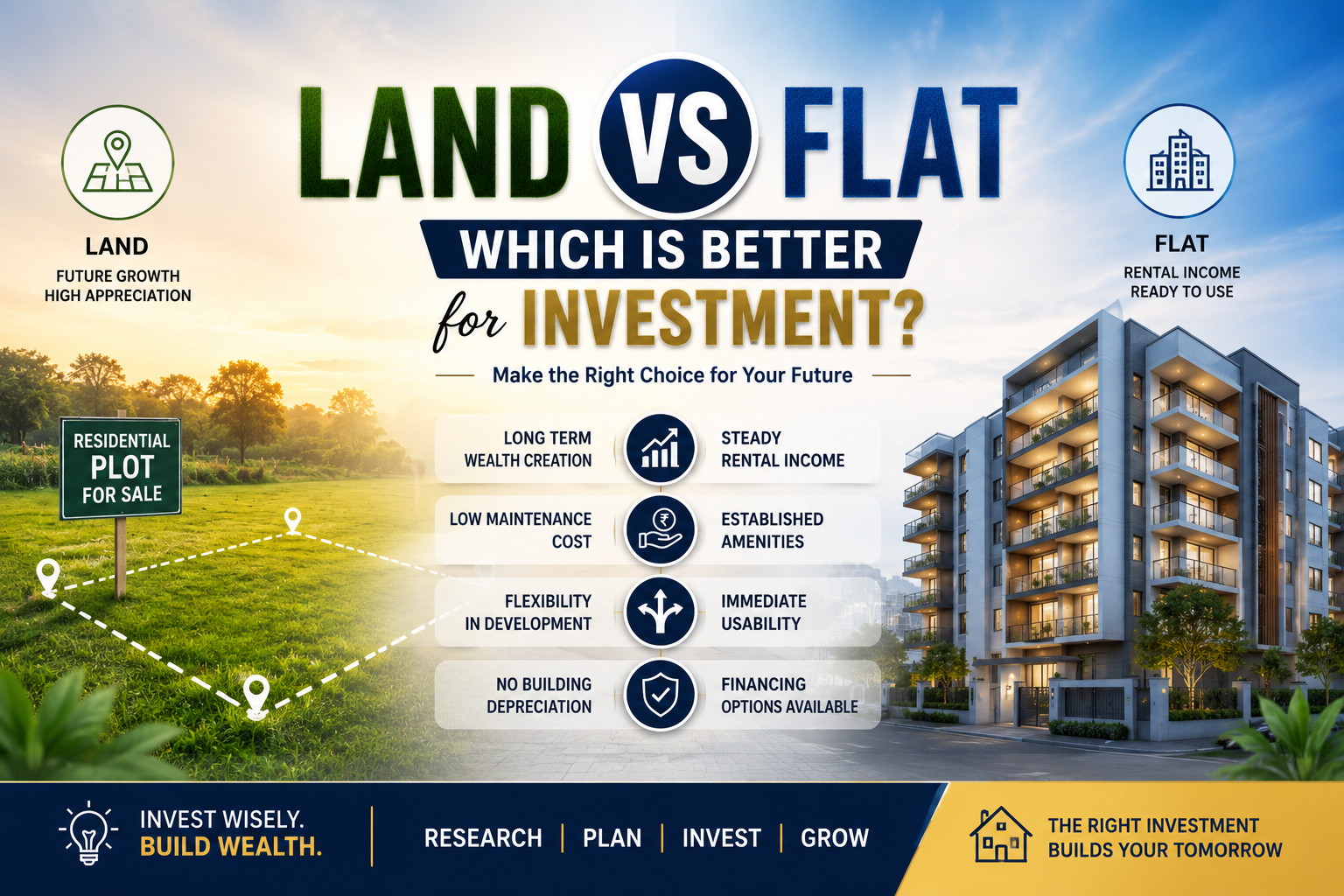
In India, when thinking about real estate investment, one question that often comes to mind is Land vs Flat – which is better for investment?
Both can be useful, but they are for different investment goals. A flat can provide rental income, immediate use and access to existing amenities, whereas land offers flexibility and the potential for long-term appreciation, especially in up-and-coming areas.
Which is better depends on your budget, risk tolerance, investment horizon and financial objectives. Knowing the difference between land and flats will help you make a better real estate investment decision.
Land or Flat – What is the Difference?
A flat is a dwelling unit built in an apartment building or housing society. Investors can buy it for personal use, to lease it or for long-term appreciation.
Land – land is an undeveloped asset that may be developed in the future subject to local regulations, zoning and the necessary approvals.
Neither is a guarantee of returns. The location, purchase price, infrastructure, demand and general market conditions have a big impact on the future performance of the property. Advantages of Investing in Land
Potential for Long-Term Appreciation
Land with good infrastructure, urban expansion, improved connectivity or increasing demand in the location can have high long-term appreciation potential.
Areas near highways, industrial corridors, tourism destinations and developing cities may be of interest to investors looking for future growth.
Less Maintenance
Constructed flats generally require a higher level of maintenance than vacant land. Investors can save on the regular maintenance of the society and expenses of the building. However, one needs to consider the applicable taxes, security and other costs of ownership.
Flexibility Goes Beyond
If the owner can build a house or develop the land in the future, provided they get the necessary permissions and follow the relevant regulations, a plot could offer flexibility.
No Depreciation of Building
A flat is a structure that is built. It can get old over time. With land, the underlying asset is not subject to the same physical depreciation as a building , although its market value still depends on location and demand. The Advantages of Purchasing a Flat
Rental Income Potential
One of the biggest pluses of investing in a flat is the potential for recurring rental income.
Apartments located close to the centres of employment, educational institutions, transportation networks and commercial areas can attract tenants and offer regular rental opportunities.
Ready to Use Immediately
A ready-to-move-in flat can be occupied or rented out immediately. This makes flats a great option for investors who are looking for an asset that can provide both utility and income potential.
Existing Amenities
Flats in developed residential societies may have facilities like security, parking, water supply, power infrastructure, recreational areas and community amenities. These features can increase their appeal to tenants and end-users.
Funding Options
Home loans and property finance are subject to the lender, property and borrower financial profiles for eligible residential purchases. Investors should compare the total cost of borrowing before making a decision.
Land or Flat? Which is a better investment?
There is no single answer as to which investment will give better returns.
If you're looking for rental income and the possibility of appreciation, a flat could be a better choice. If your primary goal is long-term capital appreciation and flexibility, land might be a better choice.
For example, an apartment in a well-established location may generate rental income relatively soon, whereas a plot in an emerging corridor may take several years before infrastructure and local demand see significant improvements.
So, your time horizon is very important. An investor should decide on an asset class based on their financial objectives and not expect that one property type will always outperform the other.
Things to keep in mind before investing
Think carefully about the location before choosing between land and a flat. Consider connectivity, nearby infrastructure, job opportunities, schools, health care, commercial activity and future development.
Your investment budget is also important. Determine the total cost, including registration fees, taxes (if applicable), financing costs, maintenance and other transaction costs.
You also need to think about your exit strategy. Consider who might buy the property from you in the future and whether there is real demand in that area.
Last but not least, never compromise on legal verification.
Legal Due Diligence For land: check title, ownership, encumbrances, land-use classification, approved layout, road access and applicable development permissions.
For flats, check out the developer’s track record, project approvals, RERA registration where applicable, construction quality, possession status, maintenance charges, location and resale potential.
Due diligence can help investors avoid expensive legal and financial troubles.
Which one’s better for you?
Choose land if you have a longer investment horizon, want lower ongoing maintenance and are happy to wait for an area to develop.
If you are looking for a move-in ready property, potential rental income, established infrastructure and immediate usability, go for a flat.
Investors can also look at diversifying their real estate portfolio across different property types depending on their financial capacity and risk profile.
Summary
There is no right answer in the debate over land vs flat investment. Both can generate long-term value if acquired at the right price and in the right location.
Land may offer flexibility and potential appreciation; flats may offer usability, established amenities and rental income potential.
Ultimately, it comes down to your budget, financial objectives, risk profile and investment horizon.
Do your legal due diligence before investing, study the location and understand the future demand. In real estate, the right location, price, clear documentation and patience can be more important than simply choosing between land and flat.